By Ally
 One of the greatest blessings of our property is that it came with a well already dug when we purchased it. Although the well hose, pump, and other components are a different matter, as we did not handle that ourselves, we did take on the task of the piping that runs from the center of our property to the well, along with the pressure tank and its connections. Each of our individual water tanks is equipped with pumps, and we had to dig trenches from those tanks to our RVs.
 The distances varied, but none exceeded 50 feet in total. We set out to dig these trenches by hand to protect the piping, and it certainly took a considerable amount of time. The top layer of our soil is relatively easy to dig through, but as you go deeper, you encounter an abundance of rocks! (In some areas, you hit them even sooner). If rocks were as valuable as gold or silver, we would have made a fortune by now!
Step #1: Digging the trench
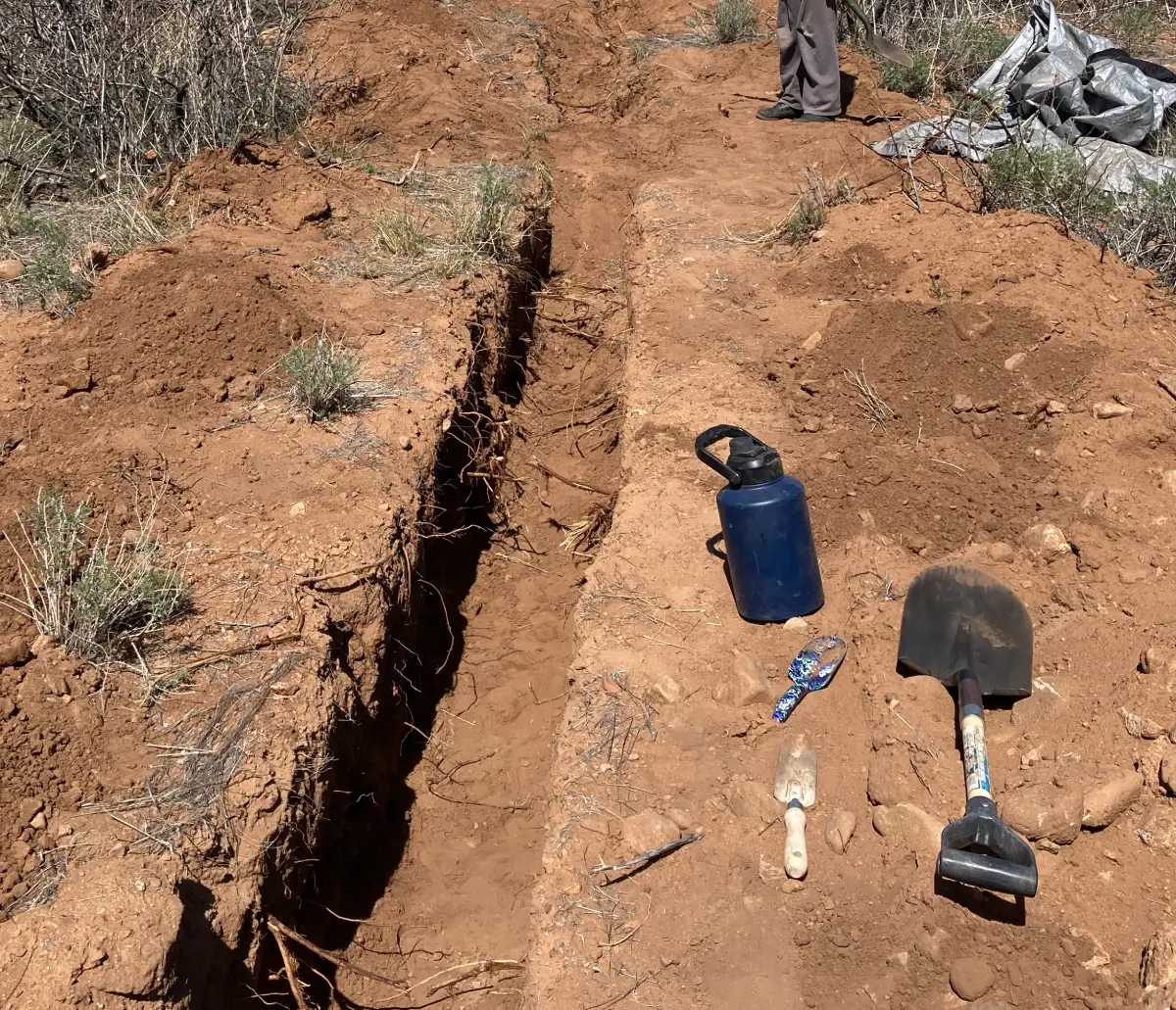
Then came the challenge of starting to dig the trench from the well to Yolan's water tank, which would then extend to the others. Not just 50 feet, but a whopping 500 feet - that's longer than a football field! We quickly understood that digging by hand would take forever. That's when we decided to combine our resources and invest in equipment that would greatly accelerate our progress. Enter: the backhoe. The backhoe we chose was the Central Machinery 8HP Towable Backhoe from Harbor Freight. We had to repair teeth that fell out and learn not to get the backhoe stuck in the trench. Although we encountered our share of problems with it at times (sometimes due to user error or pushing it beyond its limits), overall, it has been a tremendous help in saving a lot of time on various projects, particularly with the well piping.

Initially, we began by digging the trench moving forward, only to discover that it was far more efficient to dig in reverse. What a change that made! We alternated "driving" the backhoe, gradually progressing from the center of the property to the well, stretching 500 feet, which was approximately 2ft wide and 2-3 ft deep. Due to the accumulation of rocks beneath, the two off grid girls not operating the backhoe would follow behind with shovels, pickaxes & the Sawzall to clear away any excess rocks or roots that the backhoe missed, allowing it to advance more swiftly. Our goal was to ensure that the pipes would be placed below the frost line. With a significant step in the process completed, we were soon faced with the task of laying down the piping... or would that be soon? Due to the demands of "life," the project ended up on hold for over a year before we resumed the work. Unfortunately, weeds began to make the trench their home in the meantime.
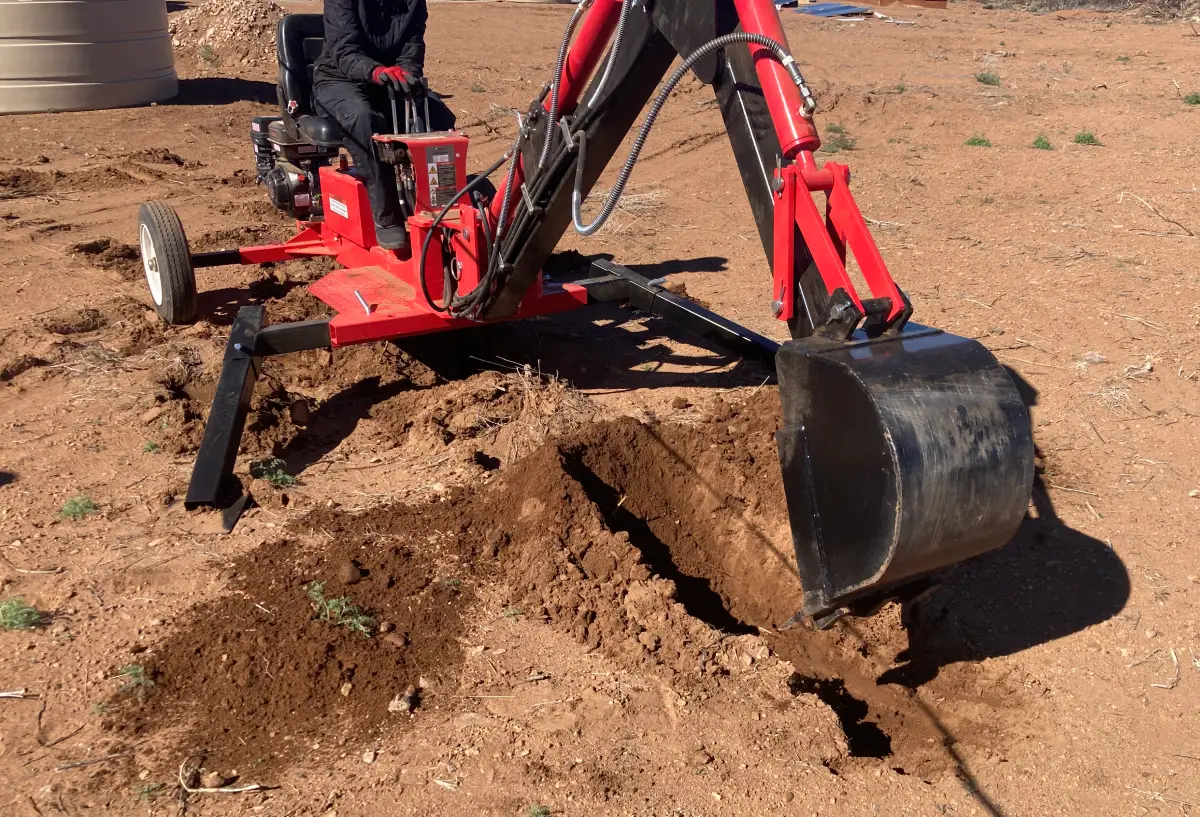
Initially, we began by digging the trench moving forward, only to discover that it was far more efficient to dig in reverse. What a change that made! We alternated "driving" the backhoe, gradually progressing from the center of the property to the well, stretching 500 feet, which was approximately 2ft wide and 2-3 ft deep. Due to the accumulation of rocks beneath, the two off grid girls not operating the backhoe would follow behind with shovels, pickaxes & the Sawzall to clear away any excess rocks or roots that the backhoe missed, allowing it to advance more swiftly. Our goal was to ensure that the pipes would be placed below the frost line. With a significant step in the process completed, we were soon faced with the task of laying down the piping... or would that be soon? Due to the demands of "life," the project ended up on hold for over a year before we resumed the work. Unfortunately, weeds began to make the trench their home in the meantime.
Step #2: Laying the piping
Fortunately, during the beginnings of monsoon season, the ground was softened a bit by the rain, allowing us to easily pull out any large weeds that had sprouted in the trench as we started laying down the pex piping. We opted for 1" pex as it was the most budget-friendly option for us. Upgrading to 1.5 or 2 would have been considerably more expensive. Additionally, we viewed a YouTube video featuring a comparable scenario: approximately 500 feet and similar gpm, and it was effective for them. Unrolling the piping was certainly a job that required all three of us, as it was bulky, heavy, and made of an inflexible material that made it trickier to handle. However, with determination, we managed to unroll it along the trench without falling in ourselves (well, not too often anyways!) and reached the well.


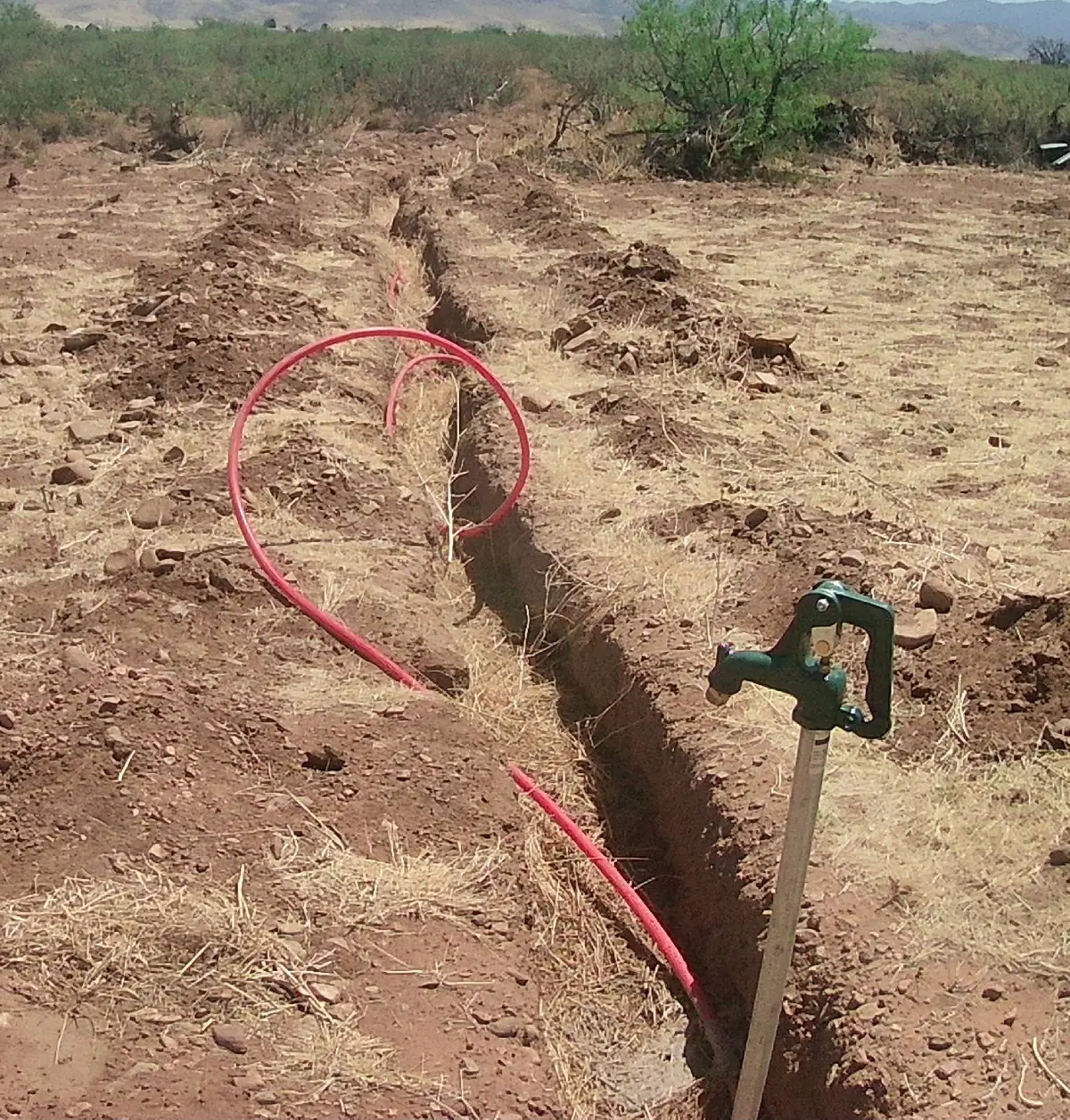
Next, we temporarily connected the piping to the well (we needed additional connections to fully link it to the pressure tank) and then attached it to a yard hydrant on the side near the closest water tank. We placed that in a bucket filled with rocks and conducted a test - turned on the water and voila! Water flowed out. Praise the Lord - we successfully drew water from a distance. With a 4-spigot hose splitter, we set up where we can connect our long hoses to fill our water tanks until we later run the piping from that point to each tank.

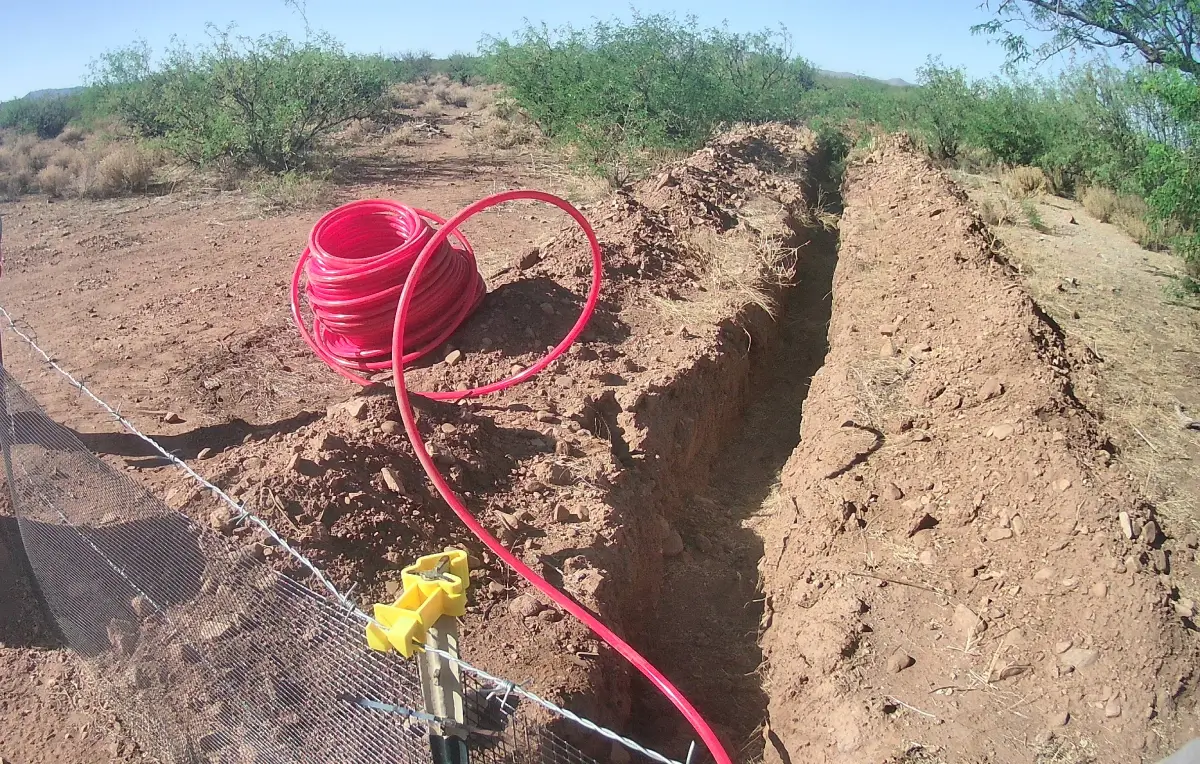
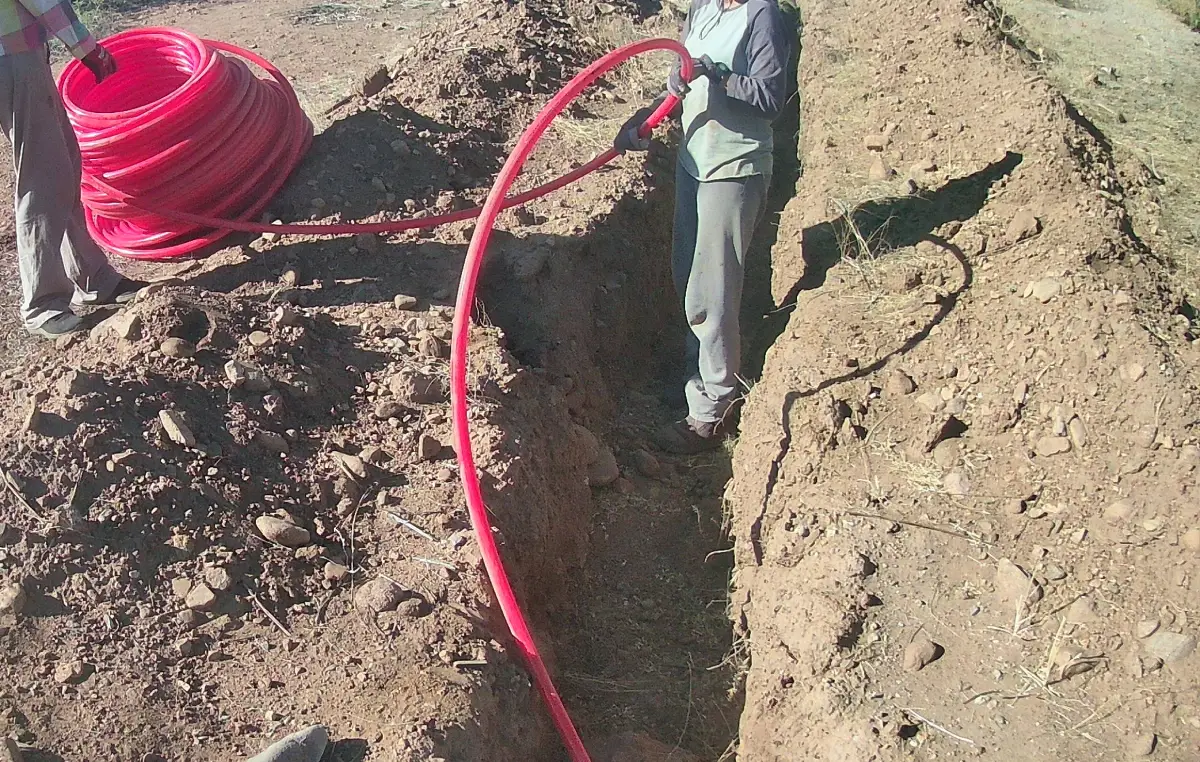
Next, we temporarily connected the piping to the well (we needed additional connections to fully link it to the pressure tank) and then attached it to a yard hydrant on the side near the closest water tank. We placed that in a bucket filled with rocks and conducted a test - turned on the water and voila! Water flowed out. Praise the Lord - we successfully drew water from a distance. With a 4-spigot hose splitter, we set up where we can connect our long hoses to fill our water tanks until we later run the piping from that point to each tank.
Step #3: Covering the trench
Well ... you might assume this just means we used the backhoe to refill the dirt in the 500 feet of trenching. Although the backhoe is now operational, back at this moment in time when we were set to fill the trench (and racing against monsoon season soon approaching), our backhoe was out of service. Thus, enter manual shovels and labor to refill the dirt. June brought the peak of summer heat, so I brought a canopy for shade, which I moved along the path as I filled it in. Hey, it worked quite well (except for that one day when strong winds knocked it over into the mesquite trees).

Step #4: Well & Pressure tank connections
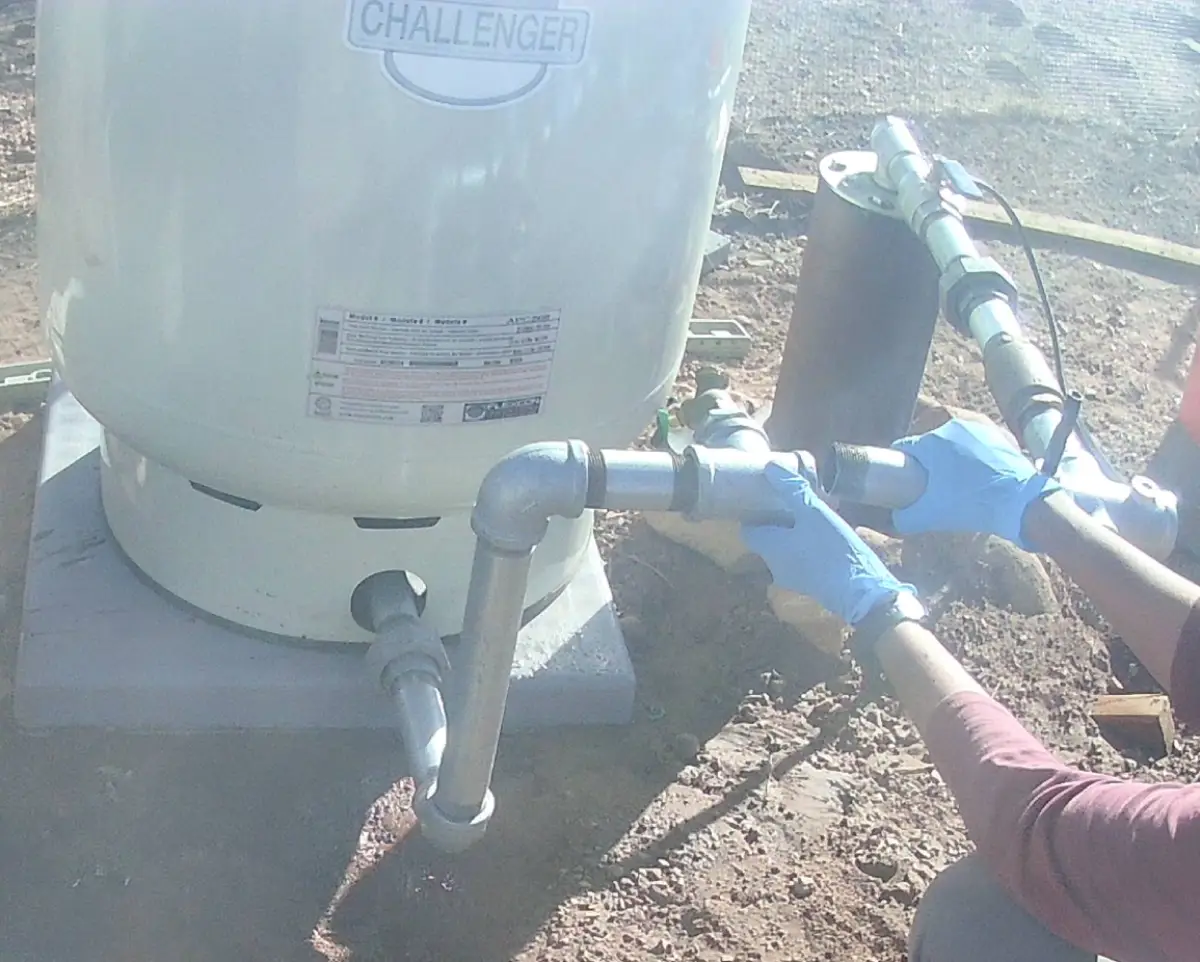
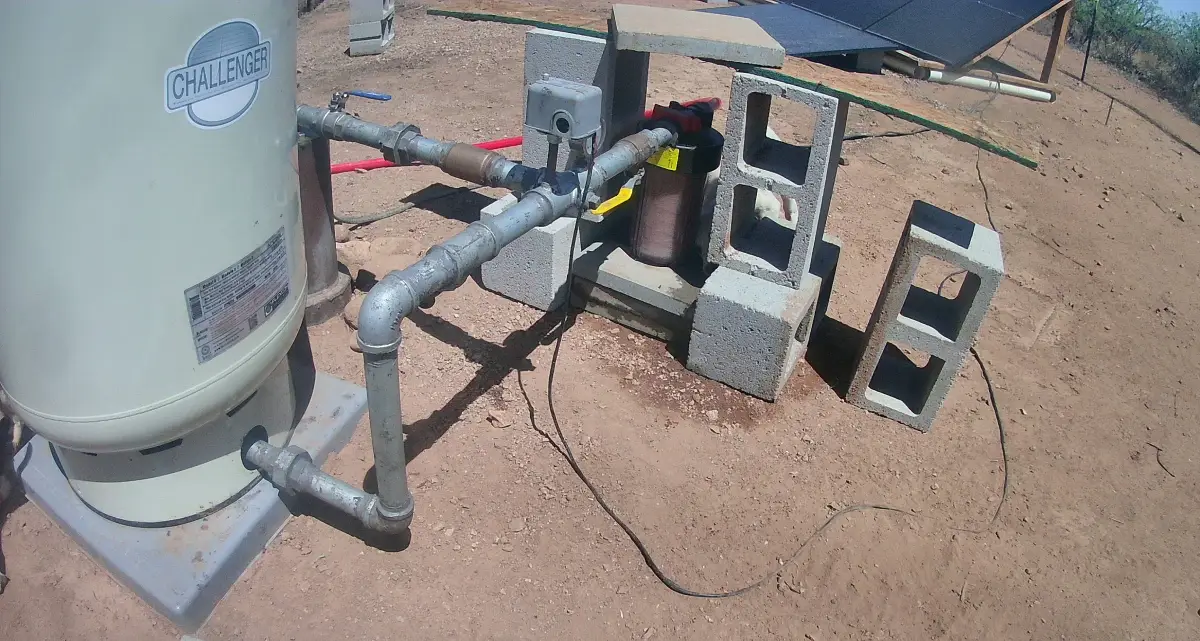
This task was somewhat perplexing, yet I believe the image will convey more than words could. We are thankful for a local well driller, as we managed to purchase the necessary components from them, and they assisted in verifying that our assembly of parts was accurate (after a few attempts - it was like solving a puzzle). Essentially, we were connecting the well to the pressure tank, then to the filter, and finally to the pex piping that directs the water to the hydrant and water tanks. Additionally, we needed shut-off valves for maintenance or emergency situations.

Overall, this project required a significant amount of time, although it wasn't as lengthy as the fencing! It was extended due to the hiatus we took in the middle. We gained a lot of knowledge, by default got in some good exercise, discovered more about machinery, realized how rapidly weeds can sprout up and occupy the trench, and without a doubt, the backhoe saved the day ... or should I say many days work.

Overall, this project required a significant amount of time, although it wasn't as lengthy as the fencing! It was extended due to the hiatus we took in the middle. We gained a lot of knowledge, by default got in some good exercise, discovered more about machinery, realized how rapidly weeds can sprout up and occupy the trench, and without a doubt, the backhoe saved the day ... or should I say many days work.
Why We Chose Pex Over The More Conventional PVC
Now some of you might be wondering my we didn't go with PVC. We chose PEX piping instead of traditional PVC or copper due to its cost-effectiveness, lighter weight, and lower price compared to copper. It offers a low installation cost while maintaining high-quality standards. Installation is straightforward, and the fittings can be easily attached without the need for complex tools. The red and blue pipes provide a clear distinction between hot and cold water. Additionally, PEX is effective at noise reduction, allowing for a quiet water flow. It is durable and resistant to erosion unlike copper, energy-efficient, and can withstand freezing temperatures. However, there are some drawbacks: it can melt in a fire, is not recyclable, rodents can chew through it more easily, and it may erode if exposed to sunlight. In contrast, PVC can become brittle over time, struggles with hot water, requires more fittings due to its rigidity, and can crack in cold conditions.
We opted for PEX-B over PEX-A. Both types serve the same purpose, and their fittings are compatible with most A and B systems. PEX-B is more widely used. Although PEX-A is more flexible and easier to handle, it comes at a higher cost. PEX-B has a greater bursting temperature, making it less prone to bursting in colder climates. Furthermore, it is less likely to leach chemicals from the tubing compared to PEX-A and offers better resistance to oxidation.
We opted for PEX-B over PEX-A. Both types serve the same purpose, and their fittings are compatible with most A and B systems. PEX-B is more widely used. Although PEX-A is more flexible and easier to handle, it comes at a higher cost. PEX-B has a greater bursting temperature, making it less prone to bursting in colder climates. Furthermore, it is less likely to leach chemicals from the tubing compared to PEX-A and offers better resistance to oxidation.